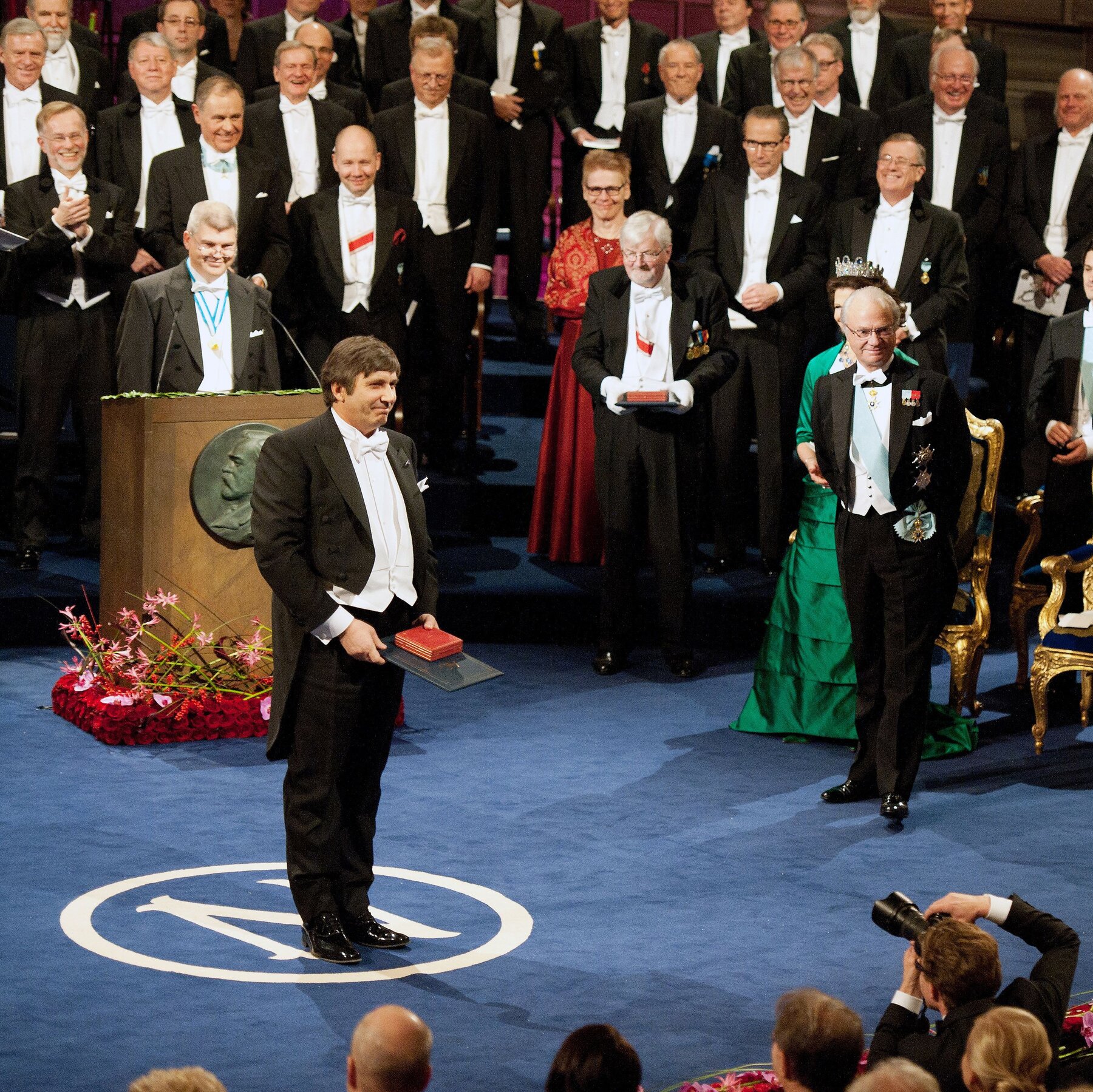
In a surprising twist of events, Nobel Prize-winning physicist Andre Geim has been stripped of his Dutch citizenship, a consequence of his decision to accept a British knighthood thirteen years ago. The discovery has sparked a discussion on the complexities of national allegiance and the personal cost of accepting international honors.
Andre Geim, a name synonymous with groundbreaking scientific achievements, notably the 2010 Nobel Prize in Physics, which he shared with Konstantin Novoselov for their work on graphene, has faced an unforeseen repercussion. Originally from the Netherlands, Geim moved to the United Kingdom where his career flourished, leading to him being offered a knighthood by the British government. At the time, accepting this honor seemed like a crowning achievement, symbolizing not only recognition of his scientific contributions but also his integration into British society.
However, the joy of this honor came with a hidden cost. Under Dutch law, citizens are not allowed to hold dual nationality in most cases. This means that accepting citizenship or a comparable national honor from another country automatically results in the loss of Dutch citizenship. Geim, who had taken British citizenship to accept the knighthood, was apparently unaware of this stipulation, or perhaps underestimated its enforcement, until recently.
The revocation of Geim’s Dutch citizenship brings to light the strict regulations surrounding nationality in various countries and raises questions about the global mobility of individuals who contribute significantly to international science and technology. It also underscores the often overlooked personal and administrative challenges faced by individuals who live and work outside their home countries.
This incident serves as a vital reminder of the importance of understanding and navigating the legal implications of dual citizenship. For many expatriates and individuals living in diaspora, maintaining ties to their homeland can be crucial for personal, cultural, and legal reasons. The loss of citizenship can have profound emotional and practical impacts, affecting everything from property ownership to retirement benefits and the right to reside.
Moreover, Geim’s situation highlights a broader issue faced by many international professionals and academics who accept honors or positions abroad. These accolades, while recognizing professional achievements, can inadvertently lead to significant legal and diplomatic complexities. As global mobility increases and the number of transnational professionals continues to rise, countries might need to reconsider their citizenship laws to better accommodate the changing dynamics of international careers.
For Andre Geim, the revocation of his Dutch citizenship is undoubtedly a significant personal loss. It serves as a stark reminder of the delicate balance between national loyalty and global recognition. As countries grapple with the implications of globalization, the stories of individuals like Geim will likely play a crucial role in shaping future policies on citizenship and national identity.
For further details, you can read the original article from The New York Times here: [https://www.nytimes.com/2025/07/04/world/europe/nobel-physicist-dutch-citizenship-revoked.html](https://www.nytimes.com/2025/07/04/world/europe/nobel-physicist-dutch-citizenship-revoked.html)