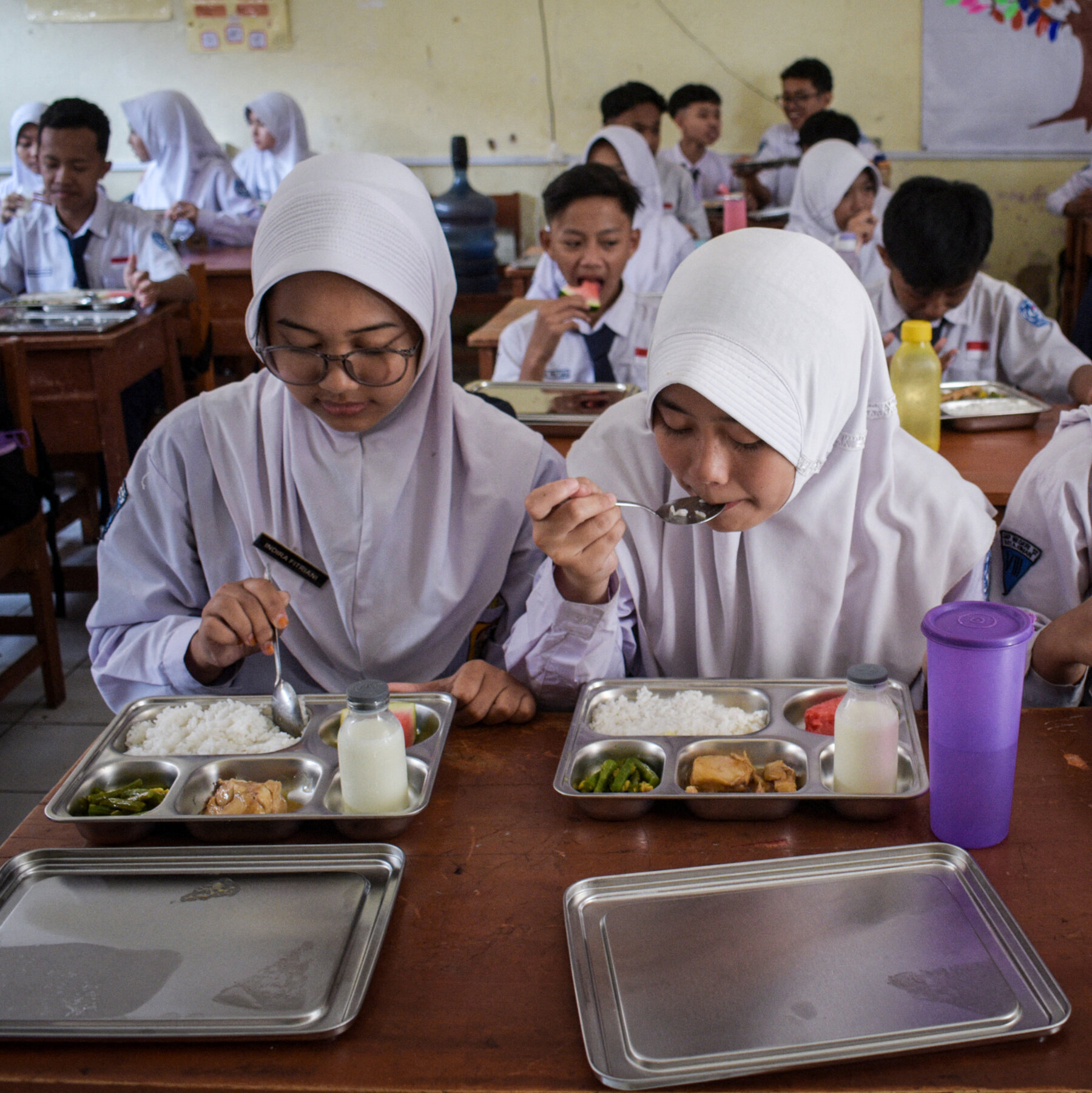
Indonesia has recently become the center of attention due to a bold declaration by its president, promising free meals to every student across the nation. This ambitious initiative, set against a backdrop of increasing unemployment, raises questions about the feasibility and economic implications of such a policy.
The president’s promise aims to tackle two significant issues simultaneously: improving nutrition and academic performance in schools, and boosting the agricultural sector by increasing the demand for local produce. The intended program would ensure that every student receives at least one nutritious meal per day, a move that could have profound implications on student health and learning outcomes.
However, the initiative comes at a time when Indonesia is grappling with a rising unemployment rate. The economic slowdown, exacerbated by global challenges, has left many economists worried. Critics argue that the government’s focus on expansive social programs like the free meal initiative might strain the national budget further, diverting resources from other critical areas such as infrastructure development and job creation.
The unemployment issue in Indonesia is not trivial. Recent statistics indicate a troubling rise in the number of jobless individuals, particularly among the youth. The government’s current challenge is to create employment opportunities while managing fiscal responsibilities. Analysts suggest that while the intention behind the free meals program is commendable, the timing and economic conditions make it a contentious issue.
Supporters of the program argue that it could stimulate local economies. By sourcing food products from local farmers and markets, the initiative could boost domestic agriculture, potentially creating jobs and supporting local communities. Furthermore, better nutrition could lead to improved student performance, which in turn may contribute to a more skilled workforce in the future.
On the other hand, opponents are concerned about the logistical challenges and the financial burden of implementing such a widespread program. They point out that the cost of setting up and maintaining the distribution of free meals across the country’s vast archipelago could be enormous. There is also the challenge of ensuring consistency and quality of food, considering Indonesia’s diverse geographical and cultural landscape.
The debate extends beyond economic and logistical considerations. It touches on the broader aspect of government priorities and the allocation of resources. With the presidential promise now public, the government faces the task of detailed planning and execution to ensure that the initiative does not backfire by exacerbating the very issues it aims to mitigate.
As Indonesia navigates these challenges, the global community watches closely. The success or failure of this program could serve as a case study for other nations contemplating similar initiatives. It raises fundamental questions about the role of government in social welfare and economic management during uncertain times.
In conclusion, while the president of Indonesia’s promise of free meals for students is a bold step towards addressing educational and nutritional needs, it is imperative that careful consideration be given to the economic and practical realities of such a program. Balancing compassion with pragmatism will be key to its success or failure.
Reference: [The New York Times](https://www.nytimes.com/2025/07/03/world/asia/indonesia-school-lunch-economy.html)