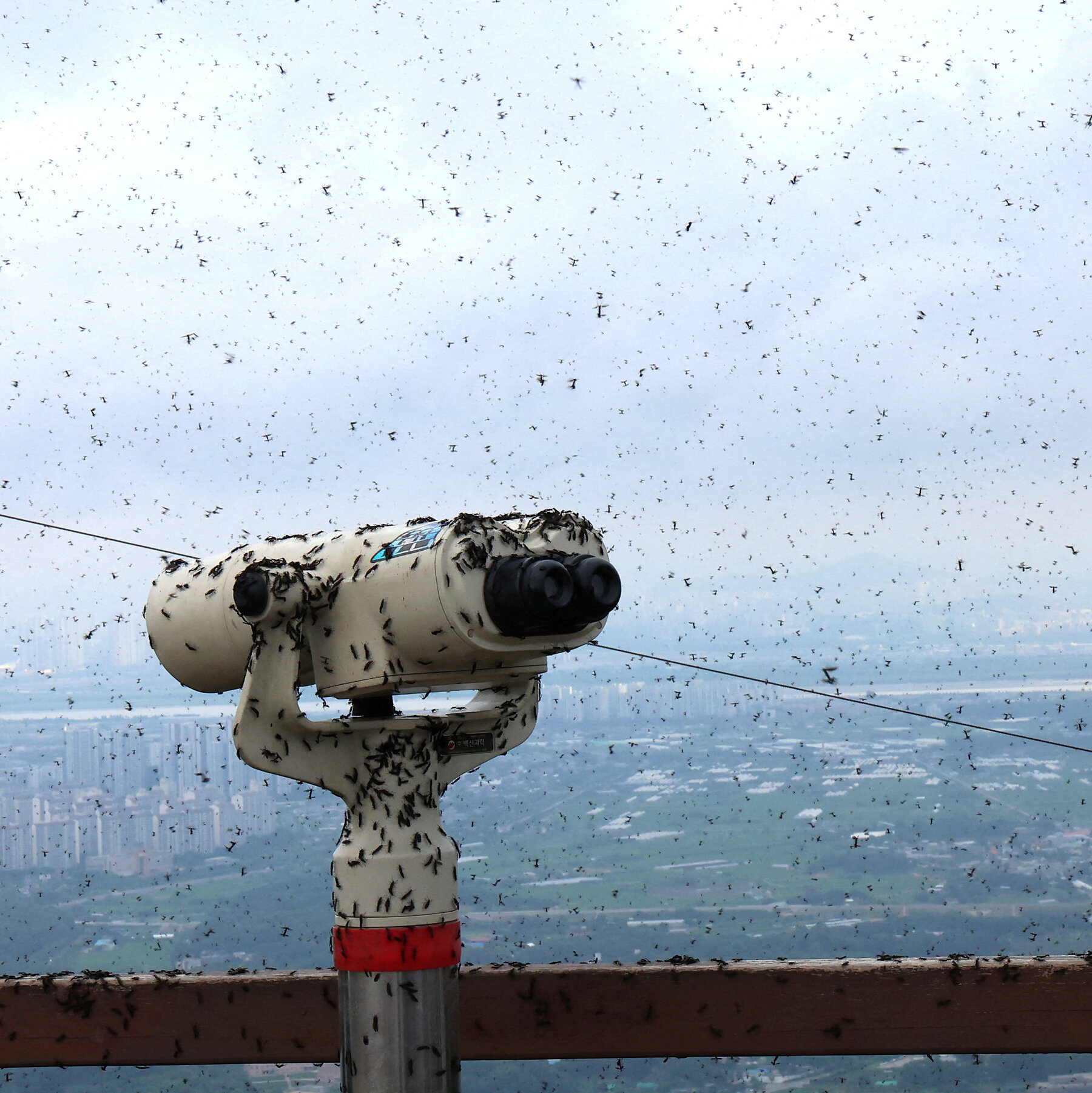
As the summer heat intensifies, residents of Seoul and the surrounding areas in South Korea are facing an unwelcome surge in lovebug populations. These small, seemingly innocuous insects have become a significant nuisance, disrupting daily life and eliciting a strong response from municipal workers and frustrated citizens alike.
Lovebugs, known scientifically as Plecia nearctica, are small flying insects that are particularly known for their mating behavior, where pairs remain coupled for days, even during flight. While they are harmless in terms of not biting or stinging, their sheer numbers and the mess they create have proven to be a major annoyance. This is especially problematic in urban areas like Seoul, where dense populations and high traffic can lead to large accumulations of these insects, affecting outdoor activities, local businesses, and cleanliness of public spaces.
Traditionally, municipal authorities have addressed insect infestations with chemical insecticides. However, in a bid to adopt more environmentally friendly practices, the current approach has shifted towards using water sprays to manage the lovebug problem. This method, while safer for the environment and non-toxic to humans, is proving less effective than residents hope. The water sprays are intended to disperse the swarms and wash away the insects from critical areas such as sidewalks, storefronts, and vehicles, where they often end up smeared on windshields and grilles, creating visibility issues for drivers.
Despite these efforts, many residents are calling for more robust measures. The sentiment in the community is one of growing impatience, as the benign nature of the lovebugs does little to offset the inconvenience they pose. Some locals argue that the situation calls for the use of stronger insecticides, as the water-based method is not sufficiently reducing the lovebug numbers or deterring their presence.
The debate over how to handle the infestation highlights a broader conversation about pest control and environmental responsibility. On one hand, there is a clear need to address public nuisances and health concerns effectively. On the other, there is an increasing push to ensure that methods of pest control do not inadvertently harm the environment or non-target species, which is often a risk with chemical poisons.
Experts in entomology and environmental science suggest that a balanced approach might be necessary. This could involve targeted use of insecticides in the most affected areas combined with continued use of less harmful methods like water sprays in less critical zones. Additionally, public education on the nature of lovebugs and how to minimize their impact through preventative measures could also play a role in managing the situation.
As the city continues to grapple with the lovebug issue, the coming weeks will be crucial in determining whether the current strategies will be adjusted. Municipal authorities are under increasing pressure to find a solution that satisfies the environmental goals of the city while also alleviating the concerns of its residents.
For more detailed coverage on this ongoing issue, visit [The New York Times](https://www.nytimes.com/2025/07/03/world/asia/south-korea-seoul-lovebugs.html).